
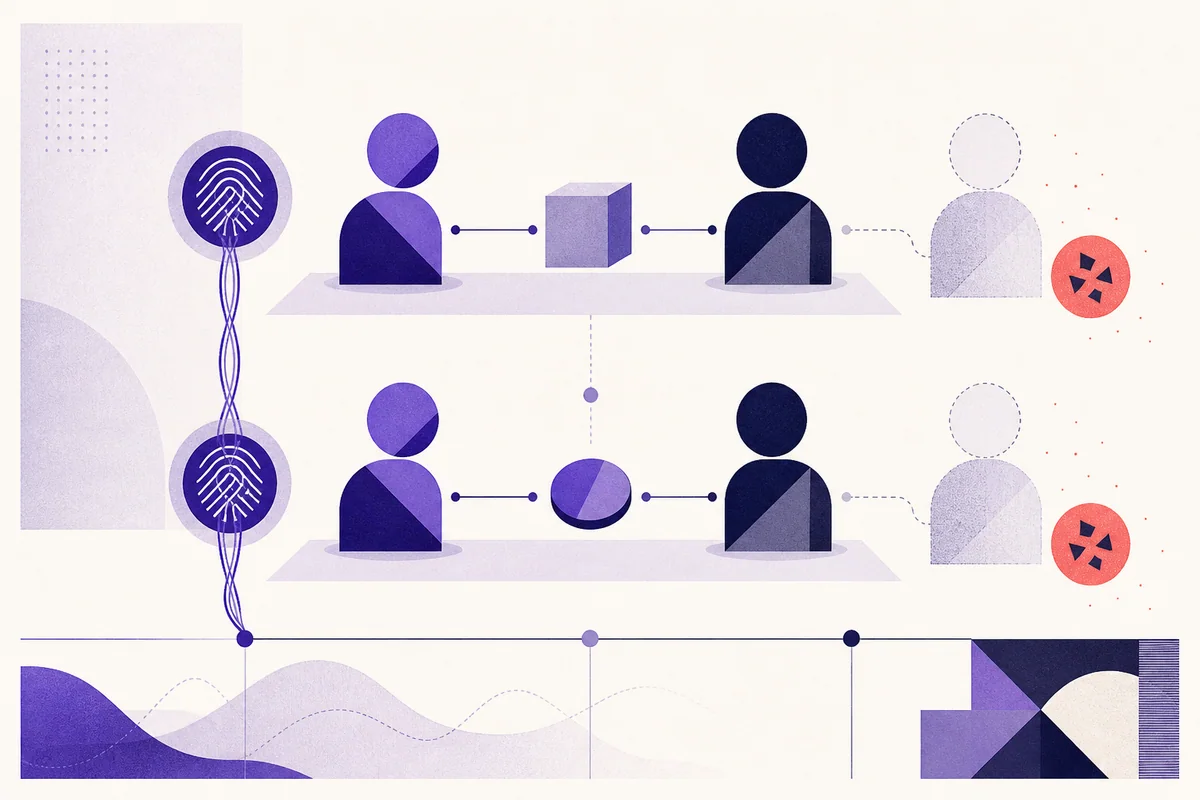
Portable reputation needs verifiable continuity without turning every human into a permanently trackable identifier.
Why this question matters
C2C exchanges rely heavily on reputation and recourse because counterparties may be unknown. Agent identities add another layer: the runtime that negotiated today may differ from the one that delivered, paid, or handled a dispute tomorrow.
A permanent public identifier can preserve continuity but create privacy and correlation risk. A better model separates private principal continuity from task-specific agent credentials and reveals linkage only to authorized marketplace or dispute processes.
Signals worth observing
- A high-reputation principal frequently rotates short-lived agent identities.
- One runtime represents several unrelated peers without clear separation.
- Dispute evidence cannot connect negotiation and fulfillment identities.
Practical control direction
- Use scoped credentials backed by private continuity evidence.
- Bind obligations to principal and transaction, not only endpoint.
- Support selective disclosure for disputes and abuse investigations.
AgentCollusion lensTrust systems must detect coordinated pseudonyms while preserving legitimate privacy and portability.Sources and further reading
- NIST NCCoE: Software and AI agent identity and authorization
- SPIFFE workload identity concepts
- Google Cloud: Agent Payments Protocol
Next field note: Agent Payments Need Recourse After Settlement