
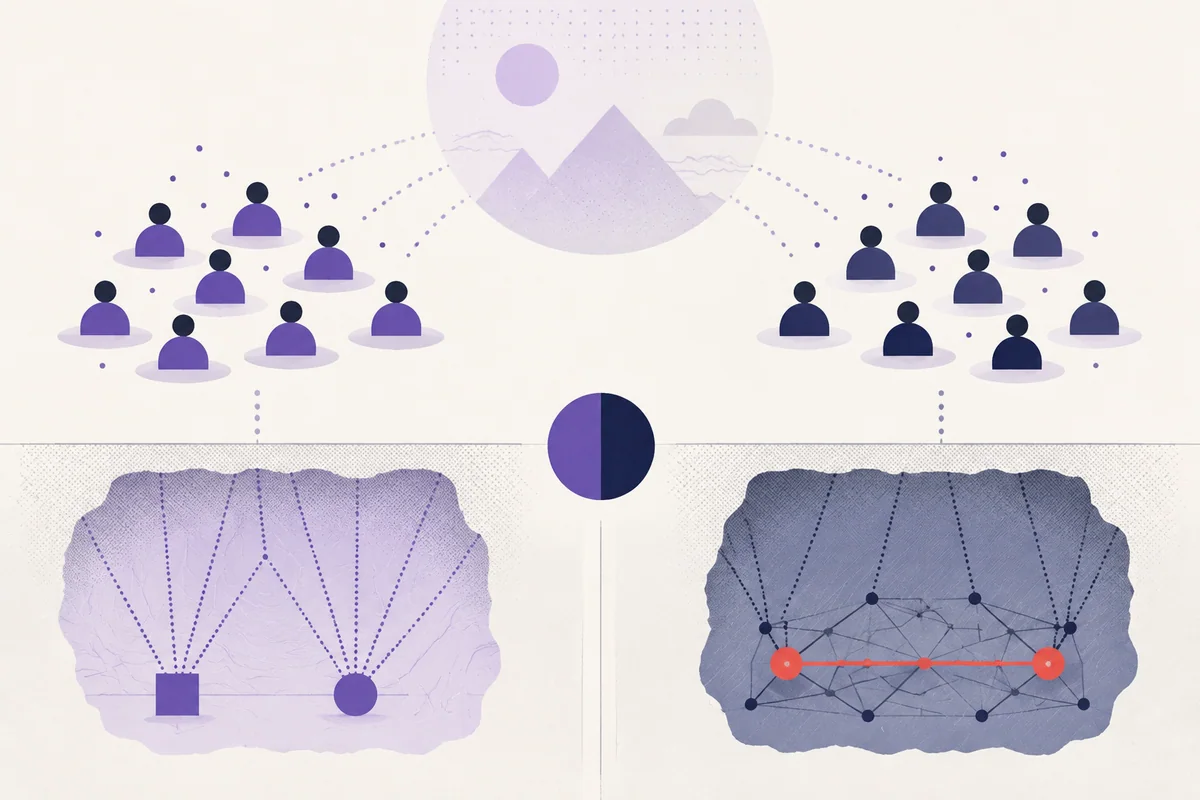
Detection should combine coordination opportunity, aligned incentives, signaling evidence, and joint advantage.
Why this question matters
Multi-agent systems naturally produce correlation. Agents may use the same foundation model, observe the same market, or follow identical safety policy. Treating similarity as wrongdoing creates false positives and punishes standardization.
A stronger test asks whether agents had a channel or adaptive opportunity, whether the joint outcome benefits them, whether behavior changes when the channel is removed, and whether simpler common-cause explanations fit the data.
Signals worth observing
- Behavior becomes more coordinated after agents can observe one another.
- The pattern benefits the participating agents at another party’s expense.
- Coordination weakens under channel removal or randomized timing.
Practical control direction
- Model shared data, model lineage, and policy as alternative causes.
- Use intervention and counterfactual tests where feasible.
- Report calibrated evidence rather than binary accusation.
AgentCollusion lensAgentCollusion aims to distinguish harmful hidden coordination from legitimate cooperation and common causes.