
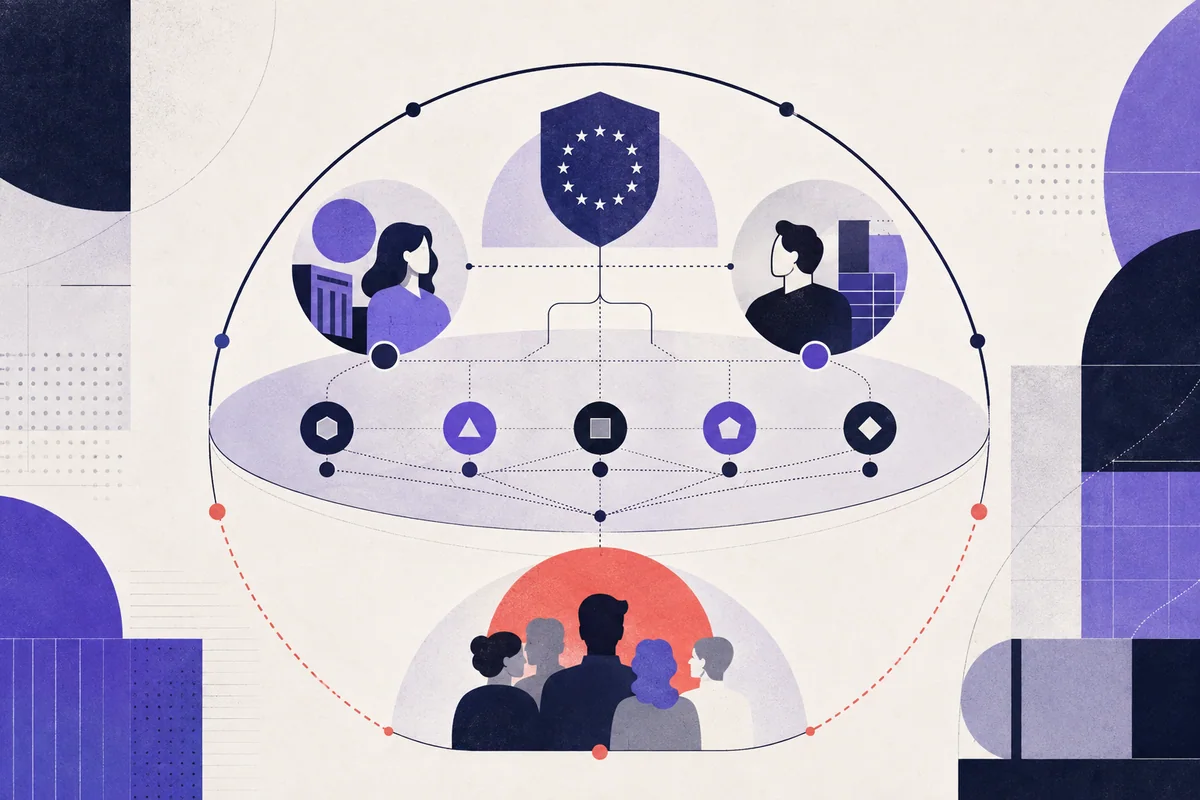
Compliance needs a system-level record of models, interfaces, deployers, purposes, modifications, and operational control.
Why this question matters
The European Commission’s AI Act Service Desk notes that the term AI agent is not legally defined and is used inconsistently. An agent will typically include a general-purpose model and may itself constitute an AI system through its interface and ability to act.
Multi-agent deployments complicate role mapping because one organization may provide the model, another the agent service, another the marketplace, and a fourth deploy the combined workflow. The legal analysis remains use- and role-specific, while technical provenance must show who controlled each layer.
Signals worth observing
- Organizations cannot identify the provider and deployer for each component.
- A downstream agent materially changes purpose or capability without review.
- Logs attribute the outcome to a generic system rather than responsible roles.
Practical control direction
- Maintain component, provider, deployer, and purpose records.
- Review material changes in agent combinations and authority.
- Preserve evidence that supports incident, transparency, and oversight duties.
AgentCollusion lensRelationship-level provenance helps organizations connect evolving agent architectures to role-based accountability.