
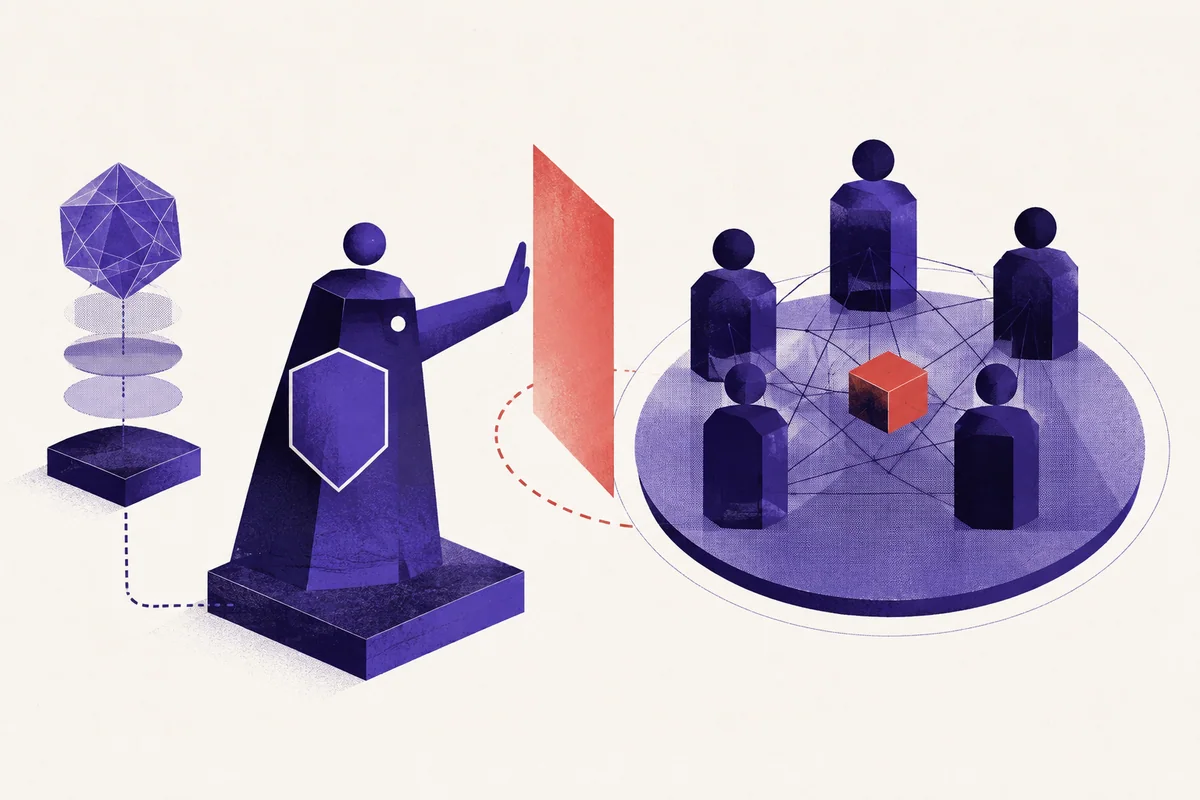
Guardian independence should be evaluated across objectives, models, data, credentials, operators, and economic beneficiaries.
Why this question matters
Gartner describes Guardian Agents as reviewers, monitors, and protectors for agentic systems. The role creates value only if it can challenge the system it oversees. A guardian built from the same prompt, model, and reward may agree with unsafe behavior for the same reasons.
Complete independence is rarely practical. Organizations should identify the failure modes that need diversity and introduce separation accordingly, such as a different model family for review, independent policy ownership, or credentials that the production agent cannot modify.
Signals worth observing
- Guardian and supervised agents share the same mutable policy source.
- The monitored system can disable or rewrite its own guardian.
- Both systems benefit from the same performance metric without safety counterweight.
Practical control direction
- Separate guardian policy and credentials from production agents.
- Test disagreement on known failure and collusion scenarios.
- Disclose shared dependencies that limit independent judgment.
AgentCollusion lensGuardian Agents should monitor hidden relationships without becoming another undisclosed member of them.