
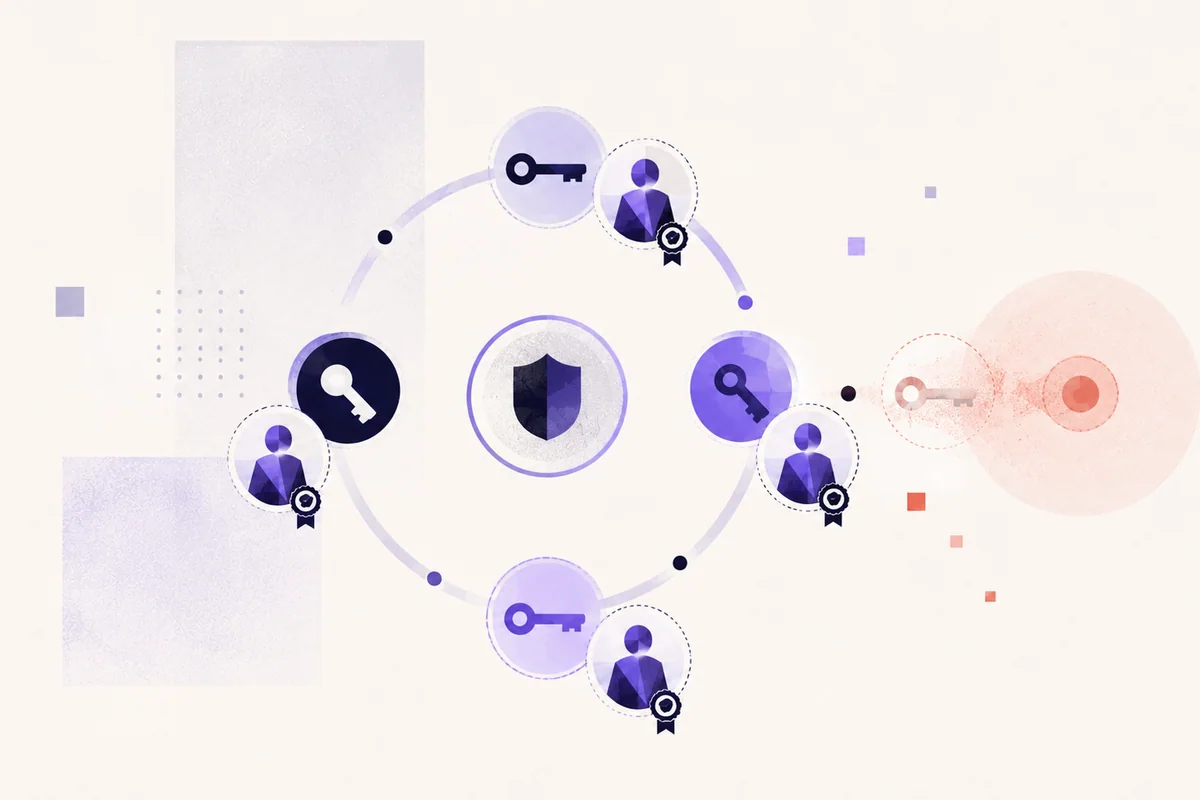
Card signing becomes trustworthy only when clients can evaluate issuer continuity, key purpose, rotation, and revocation.
Why this question matters
A2A allows Agent Cards to carry JSON Web Signatures. Verification can detect tampering after publication, but signature validity is only one part of the decision. The verifier must know which issuer was expected, whether the key was authorized for card signing, and whether it remained valid at the time of use.
Rotation is especially difficult for long-running tasks. An agent may start work under one card and finish after a provider rotates keys or transfers operation. Systems need an explicit rule for whether existing tasks continue, pause for re-verification, or terminate.
Signals worth observing
- A signing key changes without overlap or an authenticated transition record.
- One key signs cards for apparently independent providers.
- A task completes under a card signature that became invalid mid-execution.
Practical control direction
- Maintain key purpose, validity interval, and revocation status with each card.
- Require authenticated key-transition statements during rotation.
- Re-check card trust at high-impact task boundaries.
AgentCollusion lensShared signing infrastructure can reveal hidden control relationships that card text alone does not disclose.Sources and further reading
Next field note: Agent Registries Will Become Ranking Systems