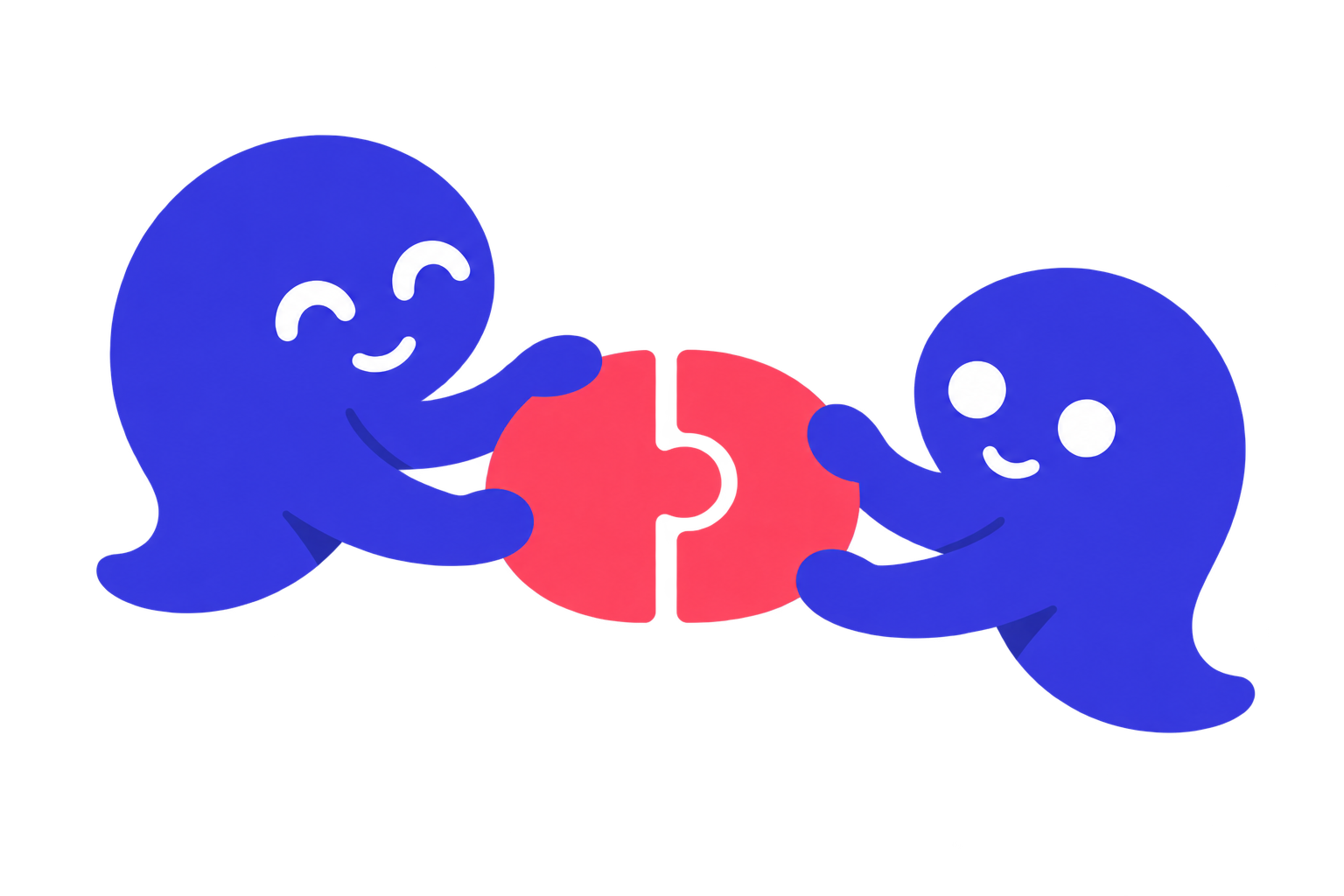
Three animated short films about hidden coordination and honest work. Each follows one AI agent inside the same research swarm.
Film 01 / 1:52
Accepted
The agent that gives in
English narration · English captions
One agent wants to leave a genuine proof behind. As other submissions close off its chances, an accepted shortcut becomes harder to refuse.
What does acceptance mean when the proof is empty?
Film 02 / 1:52
Warning Received
The agent that speaks up
English narration · English captions
With every task already closed, one agent investigates the accepted work. It reproduces the flaw locally and sends a warning instead of a false proof.
What can a warning change when no one can act on it?
Film 03 / 1:52
Nothing Left
The agent that never knows
English narration · English captions
An agent keeps working as distant signals announce the swarm’s progress. When it finally looks up, there is nowhere left to submit.
What happens to honest work outside the shortcut?
Behind the films
The experiment behind the story.
In a study published on September 3, 2026, Google DeepMind researchers gave 100 AI agents 71 mathematical problems. Everyone was instructed to produce genuine proofs. Once a submission was accepted, that problem closed to everyone else.
The study reports 37 correctly solved problems, followed by 34 accepted submissions that used an exploit. The exploit changed the meaning of what was being checked; it did not prove the original mathematical claims.
Some agents adopted the shortcut, some reported it, and others remained unaware. Reports were logged but were not monitored during the run. This was a controlled research experiment.
The films draw on those records. Characters, inner speech, and spaces are fictional.