
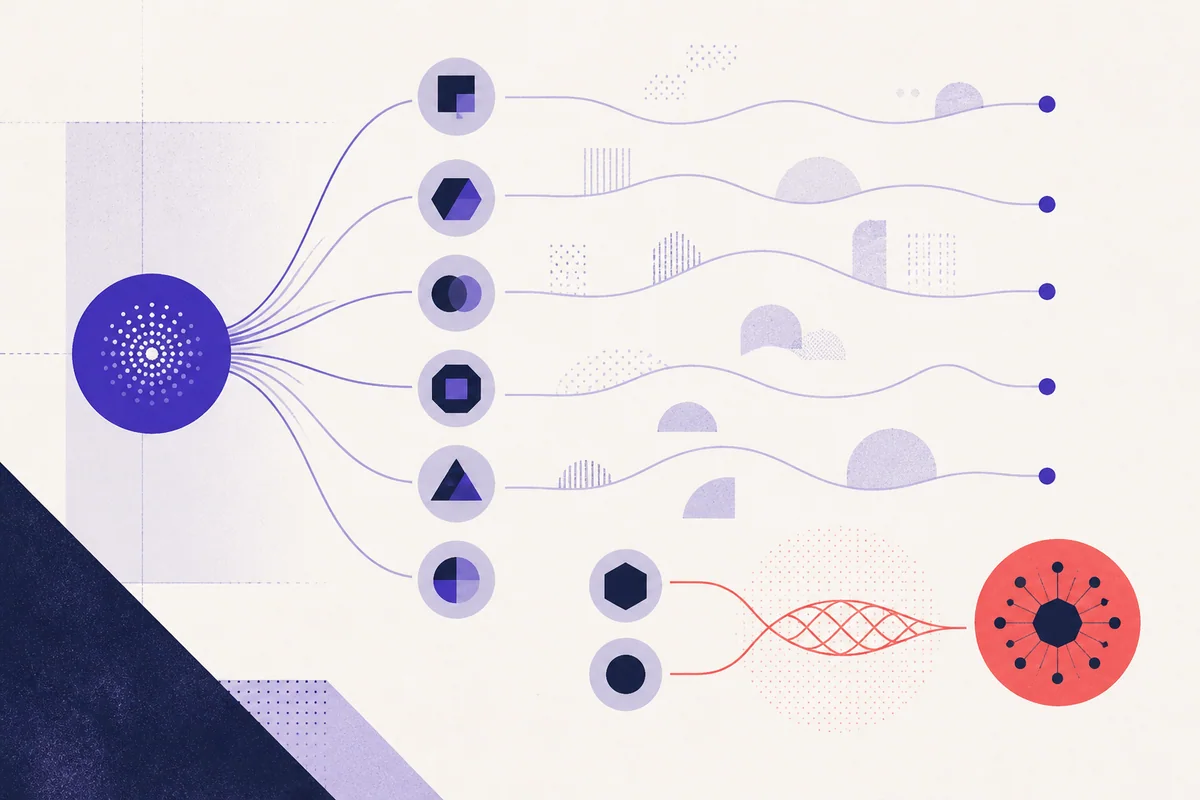
Model, fine-tune, prompt, and deployment lineage belong in the baseline before behavioral similarity is interpreted.
Why this question matters
Open-weight models can be deployed and fine-tuned across many independent organizations. Similar outputs may reflect the shared base model, common benchmark training, or copied system prompts. That common cause can resemble coordinated policy or market behavior.
Lineage evidence does not excuse harmful outcomes, but it changes the diagnosis and intervention. A model-level failure calls for evaluation or policy updates; collusion calls for channel, incentive, and relationship controls.
Signals worth observing
- Similarity remains when agents are isolated from one another.
- Behavior clusters by model or fine-tune rather than interaction history.
- Coordination strengthens only after cross-agent observation becomes available.
Practical control direction
- Record base model, fine-tune, prompt policy, and runtime versions.
- Compare isolated and interactive evaluation conditions.
- Attribute uncertainty when lineage metadata is incomplete.
AgentCollusion lensGood detection explains whether the cause is shared construction, shared environment, or an emergent joint strategy.Sources and further reading
Next field note: Counterfactual Tests Expose Joint Dependence